
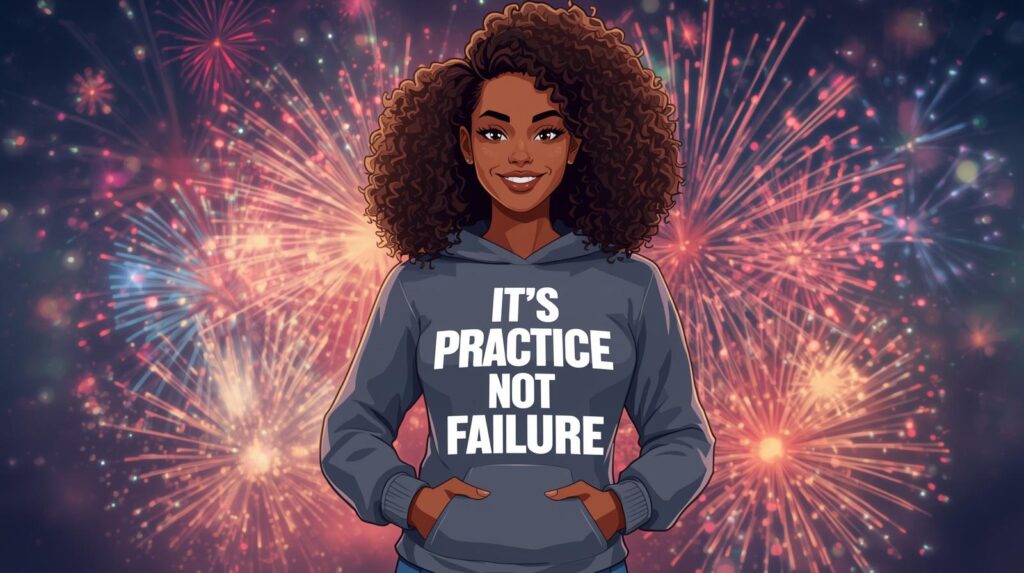
A reminder that the awkward takes don’t get cut—they make the final version possible
Let’s start with a comforting thought: nobody sees the behind-the-scenes of your life except you.
They don’t see the half-finished attempts, the quiet do-overs, the moments where you thought, “Well… that could’ve gone better.” They only see the polished parts—the parts that made it to the final edit.
And that’s important, because most of what feels like failure isn’t failure at all. It’s rehearsal.
The Part No One Posts About
Every good performance has bloopers. Every finished product has drafts. Every confident version of someone was preceded by a phase where they were quietly unsure, a little clumsy, and very much figuring it out.
Your mistakes are not evidence that you’re bad at something. They’re evidence that you’re practicing.
Think of them like behind-the-scenes footage—the kind that never makes the highlight reel but without which the whole thing would fall apart. The awkward pauses. The missed cues. The wrong turns. Necessary. All of it.
The problem is we tend to treat rehearsals like opening night. We judge ourselves harshly for not being perfect when we’re still learning the lines.
Why Bad Attempts Feel So Personal
Here’s the thing about mistakes: they feel intimate. Like they say something about you.
You forget what you meant to say in a meeting. You stumble through a new habit. You try something creative and immediately cringe. And your brain jumps straight to, “Why am I like this?”
But that’s not a character flaw—that’s a process moment.
Mistakes sting because effort is involved. And whenever effort is involved, vulnerability is too. You showed up. You tried. You cared enough to risk getting it wrong.
That’s not embarrassing. That’s brave, even if it doesn’t feel like it in the moment.
Rehearsals Are Supposed to Be Messy
No one expects a rehearsal to be flawless. In fact, if it were, it would be suspicious. Rehearsals are where you forget your lines, miss your timing, and realize, “Oh… that part needs work.”
Life works the same way.
- The first draft isn’t meant to be good
- The first attempt isn’t meant to land
- The first version isn’t meant to be the one
It’s meant to show you where to adjust.
Every “bad” attempt is a quiet note from the future version of you saying, “Closer. Keep going.”
Your Internal Blooper Reel
We all have one. The mental highlight reel of moments we wish we could delete.
The awkward conversation replayed on loop. The idea that didn’t land. The moment you spoke too fast, too slow, or said “you too” at exactly the wrong time.
But here’s what’s funny—nobody else is watching that reel. They’re busy starring in their own.
Your bloopers feel loud because you’re the only one hearing the commentary. To everyone else, it was just another moment in a long day.
And that means you get to stop treating every mistake like a permanent record. It’s not. It’s practice footage.
Mistakes Shape the Person You’re Becoming
This part matters: mistakes don’t just teach skills—they shape identity.
Every time you recover from a misstep, you become someone who knows they can handle discomfort. Someone who can adjust. Someone who doesn’t crumble at the first sign of imperfection.
That’s not something you learn from getting everything right. It’s something you learn from staying in the room when things feel a little off.
Over time, something subtle shifts. You stop fearing mistakes as much. You start trusting yourself more—not because you’re perfect, but because you’re resilient.
And resilience is built in rehearsal, not performance.
Progress Often Looks Like “This Isn’t Working Yet”
There’s a stage of growth that doesn’t get enough credit: the almost stage.
Almost getting it.
Almost understanding it.
Almost feeling confident.
It’s uncomfortable. It feels unfinished. And it’s exactly where learning happens.
If you quit at “almost,” you miss the moment where things start to click. The moment when repetition turns into rhythm. When confusion turns into clarity.
Most breakthroughs don’t arrive with fireworks. They show up quietly, after enough imperfect reps.
A Softer Way to Talk to Yourself
Instead of saying:
- “I failed.”
Try: - “That was practice.”
Instead of:
- “I’m bad at this.”
Try: - “I’m learning this.”
Instead of:
- “Everyone else is ahead.”
Try: - “Everyone else has rehearsed more.”
Language matters. Not because it changes reality—but because it changes how long you’re willing to stay with something before walking away.
The Good Stuff Comes Later (And It’s Built on the Awkward Stuff)
One day, you’ll do the thing that used to feel impossible. You’ll speak with ease. You’ll act with confidence. You’ll move without overthinking.
And it won’t feel dramatic. It’ll feel normal.
What you won’t see in that moment are the rehearsals—the mistakes, the missteps, the quiet tries that built the skill behind the scenes.
But they’ll be there. Holding everything up.
So Keep Rehearsing
Keep showing up.
Keep making the imperfect attempts.
Keep collecting the bloopers no one else sees.
They’re not wasted effort. They’re the groundwork.
Your mistakes aren’t signs that you’re doing something wrong. They’re previews of who you’re becoming.
And the good stuff?
It’s coming—right on schedule, after enough rehearsals.
Leave a Reply